
A Scenario to Reflect On
Imagine this: In a Singapore school canteen, you see a student hurriedly grabbing something out of another classmate’s bag. Your first instinct might be—“That’s stealing!” You rush over, maybe even call a teacher, or rally a few friends to confront the student.
But later, you find out that the student wasn’t stealing at all. He was helping his friend who had forgotten his wallet and needed money for lunch. Suddenly, the story looks completely different.
This is a simple example of how easy it is to misjudge a situation based on what we think we see. Many children act quickly on their values—such as fairness or honesty—without pausing to check if their actions truly reflect those values in the right way.
When Good Values Lead to Wrong Actions
It’s natural for parents and teachers in Singapore schools to focus on teaching children values: honesty, kindness, justice, loyalty. But what happens when a child, eager to “stand up for what’s right,” ends up using the wrong method?
- A child who values justice might loudly shame a classmate for breaking a rule.
- A child who values honesty may call someone a liar in front of the whole class.
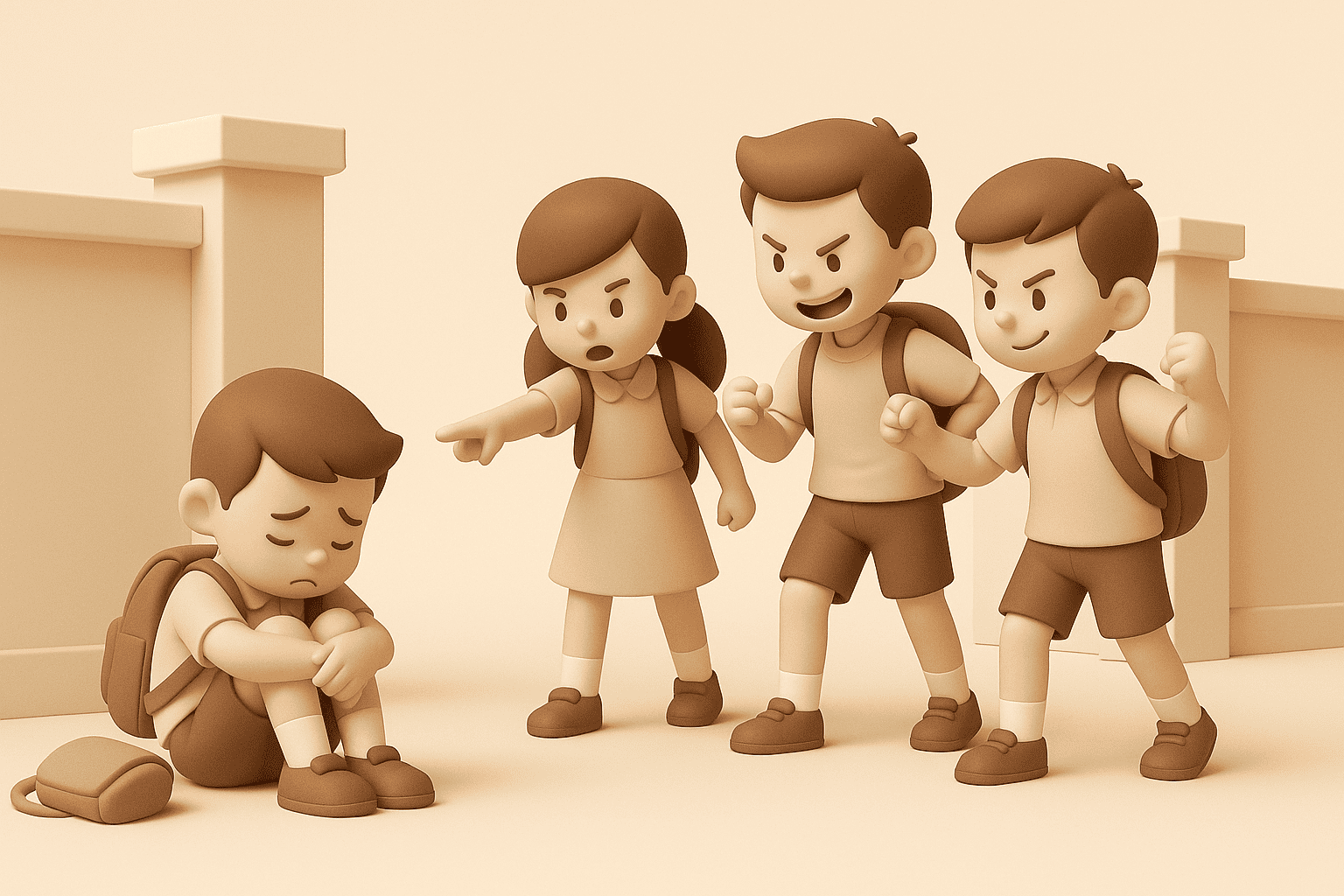
- A group of children who value “doing the right thing” may band together to discipline a peer, creating a situation that looks a lot like bullying.
The irony is that these children aren’t “bad” kids—they’re actually trying to do good, but without the maturity or guidance to apply their values wisely.
My Personal Realisation as a Parent
This hit home for me when I saw it happening in my own family. My eldest daughter, who was 9 at the time, would sometimes use her larger body to physically overpower her younger siblings, aged 6. At other times, she would rely on her sharper reasoning skills to argue her way into getting what she wanted.
To her, these actions weren’t bullying—they were simply ways of asserting her position to claim what she believed was hers. But looking at it as a parent, I realised that in those moments, she had unknowingly stepped into the role of a bully. She wasn’t aware of the imbalance of power she was creating, or the emotional impact it had on her siblings.
That was my wake-up call. I needed not only to protect my children from being bullied, but also to guide them to recognise when they themselves might become the bully. It wasn’t enough to just teach values; I had to show them how to reflect, pause, and apply those values with empathy.
The Problem with Oversimplified Lessons
Cartoons and media often don’t help either. They simplify the world into heroes and villains: the villain wears a black cloak, while a group of heroes team up to defeat him. But if you place that same storyline in a school context, isn’t that also a form of group bullying?
When children absorb these black-and-white stories, they may carry the belief that anyone who does “wrong” deserves to be shamed, punished, or ganged up on. In reality, life is rarely that simple. A classmate who makes a mistake may need guidance, not condemnation.
Why Structured Guidance Matters
This is why simply telling children to “do the right thing” isn’t enough. Without a structured approach to guide them, they may still end up hurting others while believing they’re acting correctly. Worse, when peers join in, group pressure can turn good intentions into collective bullying.
By introducing structured empathy education in schools—where children learn not only what values are, but also howto apply them thoughtfully—we can prevent misunderstandings before they spiral. Children need practice in pausing, asking questions, and considering context before reacting.
A Universal Approach: Practical and Fun
Empathy education doesn’t need to feel like another “lesson.” Schools can use simple, scenario-based activities that place students in realistic situations:
- What if a group of your friends started teasing another student—what would you do?
- How would you feel if everyone laughed at you for making a mistake?
- If you saw something that looked wrong, what questions could you ask before acting?
By making these role-plays interactive and fun—inviting students to share feelings, brainstorm responses, and even act them out—we guide them to think deeper. The goal isn’t just to “know” values, but to practice applying them in ways that build empathy and courage.
Final Thought: A Call for a Fundamental Shift
Bullying is an age-old problem. It has existed in classrooms, workplaces, and communities all over the world for centuries. To think we can solve it with a few policies and reporting channels is wishful at best—and a joke at worst.
What we need is a fundamental shift in how we approach bullying. Not just reacting after harm has been done, but shaping a culture where empathy, awareness, and responsibility are taught, practiced, and lived. Only then can we break the cycle and create a future generation that truly knows how to care for one another.